Even newborn babies love being read to. They’ve been listening to you all through your pregnancy, to the sound of your voice and your speech patterns. They might not seem to respond when you read, but they’re listening, learning, and establishing building blocks for language and cognitive development.
BookTrust recommends a ‘bath, book, bed’ routine from an early age—a simple way to make reading part of bedtime. Quiet story time can help you unwind too.
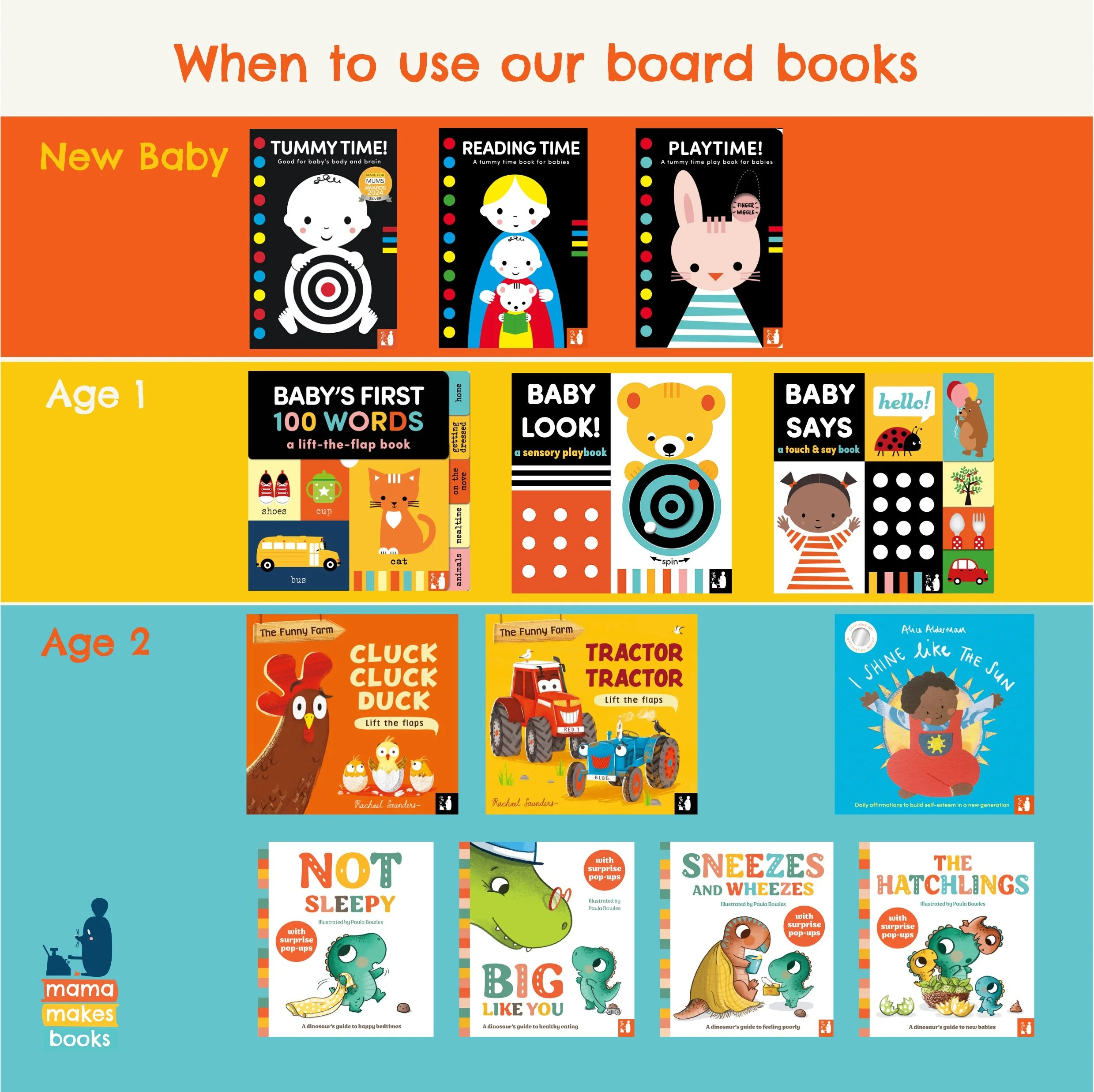
Babies and toddlers have distinctive development stages and here are suggestions for books to match.
1-9 MONTHS
Newborns can detect light and dark, shapes and movement. They can’t focus yet, though that quickly changes. Very soon they will be able to see to 20-30 cm, about as far away as your face when holding your baby. Bold contrast books are ideal, to give your baby something to focus on. And they are hard-wired to focus on faces too.
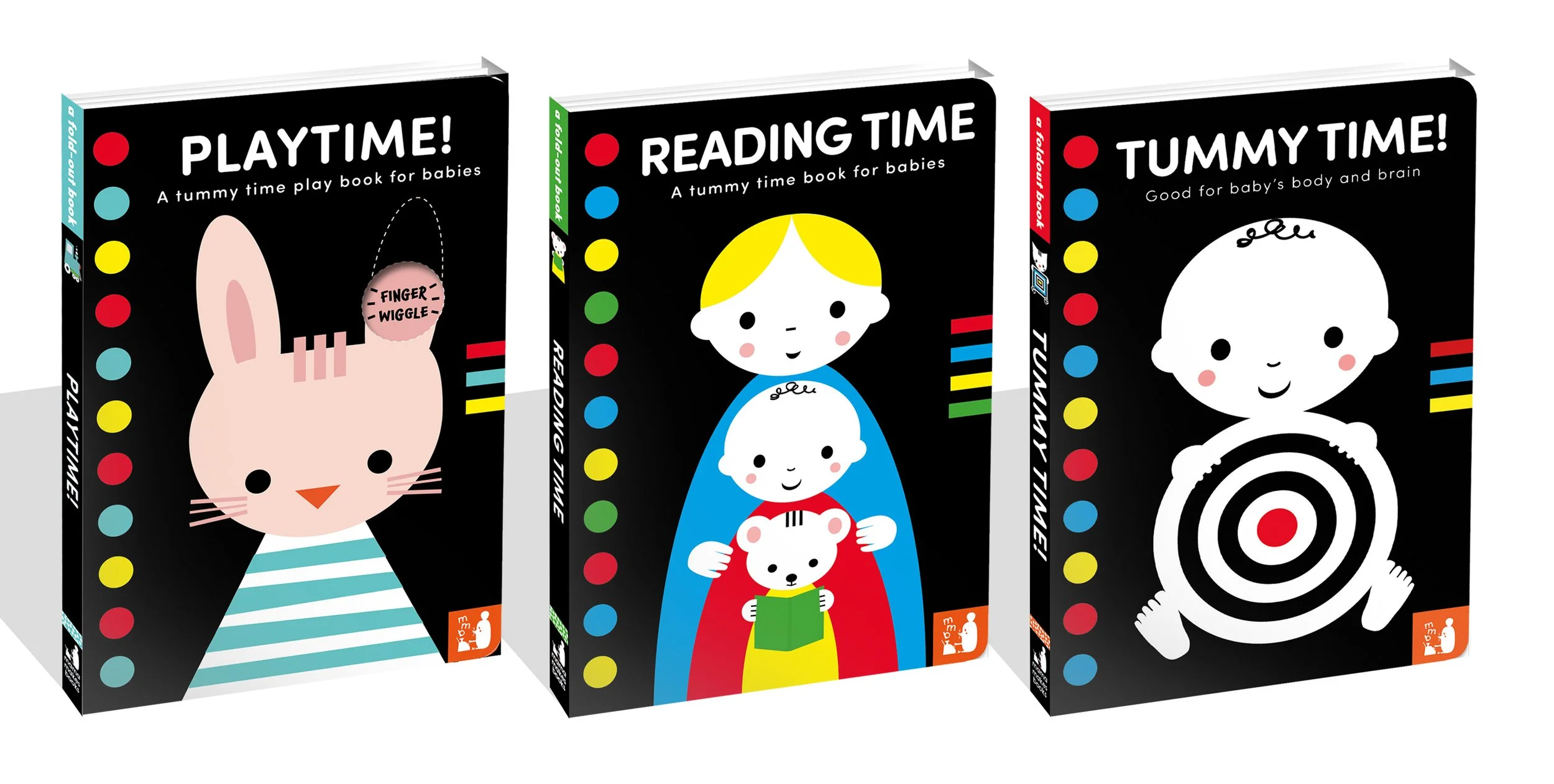
Try our Tummy Time series. They are ideal first books for newborns. They are fold-out books with high-contrast images, mirrors and finger wiggle holes and baby photographs. Stand them up in front of your baby during tummy time, nappy time, on car rides or when you need time to put on the washing!
-
The images are designed to attract your baby’s attention. The high-contrast patterns, simple shapes and faces give them something to focus on. Tummy Time! has photographs of babies too, for older babies Reading Time has first words and a gentle ‘I see the moon’ nursery rhyme. Playtime has finger wiiggle holes to encourage head turning and face-to-face interaction.
Parents have described it as a ‘game-changer’. Selected for Bookstart by BookTrust and shortlisted for the Mother & Baby Awards: Best Product for a Newborn.
-
Lots of babies don’t like being put on their tummies but it is important to persevere. You can position Tummy Time! where your baby can comfortably see it and the contrasting pictures, photographs and mirror give them interesting things to look at while they spend time on their tummy.
-
The books encourage early visual engagement, curiosity and shared interaction. Used during supervised tummy time, they encourage a physical work-out too – head-lifting, neck muscle development and upper body strength – all important for babies' physical development.
-
Readers have told us that they use Tummy Time! during nappy changes and for happier car journeys. But don’t just take our word for it, here’s some reader reviews:
“It’s probably the best book for babies to look at.”
“The first time I could get a few minutes to do chores.”
“My babies loved it to shreds so I bought another.
“My four month old loves it and squeals with delight.”
“This has now become my baby's favourite 'book' we read it most nights before bed as he selects it. He's 10 months old and still not bored of it! Loves the happy baby image which always gets a huge smile and gives himself a kiss in the mirror and a kiss to the sleepy baby image.”
9-18 MONTHS
As your baby’s vision becomes as clear as an adult’s, they can point at things they want and start ‘demanding’ them. Reaching begins at about four months, depth perception is developed, helping your baby judge how far away things are and try to grab them. Books may be among the things they reach for, with grabbing pages marking the beginnings of page turning. Choose tough, tearproof cloth or board books, with simple storylines and bright, uncomplicated pictures to point to and recognise.
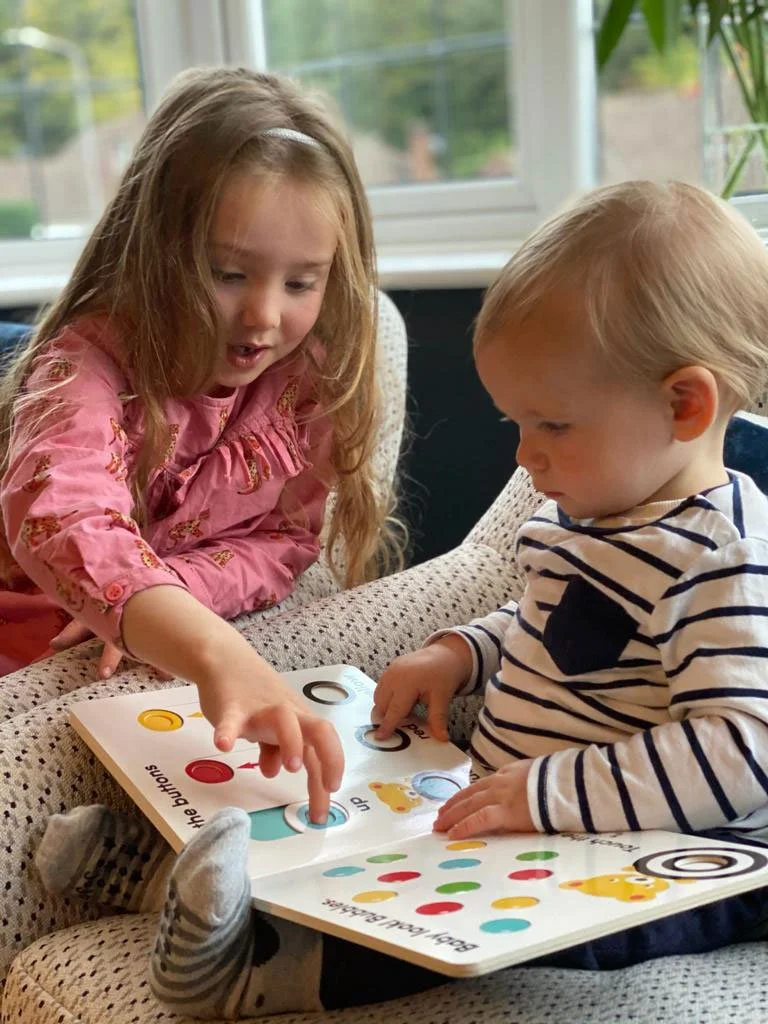
Try Baby Look! this fun and durable interactive board book has been thoughtfully designed for your baby as they grow. The bright and bold illustrations will capture their attention, and the wheel, sliders, mirror and tactile touch-and-feel patches will encourage the development of their fine motor skills and language development.
-
You don’t have to read a book from beginning to end, dip in and out together. A bright, colourful book like Baby Look!, gives your baby touch-and-feel patches, sliders and a mirror – babies love looking at themselves.
-
Grabbing pages is part of exploring a book and learning how to turn them. Baby Look! has thick board pages designed for a bit of rough handling, so it can sit alongside the toys in your baby’s toy box. It also conforms to British and EU toy safety standards.
-
Babies start making early vowel sounds from around four to six months and repeating syllables around their first birthday. When you read together, connect the words you say with the pictures on the page to help build a vocabulary of favourite words. Baby Look! introduces first words, colours, numbers, emotions, body parts and animals to practise together. Once your baby has more words, try Baby’s First 100 Words, a lift-the-flap book for identifying and naming familiar things in their world.
-
Readers have told us that they use Baby Look! to help develop fine motor skills and language development. But don’t just take our word for it, here’s some reader reviews:
“Bought this for my 10 month old nephew who absolutely loved it, so did his 2 year old brother! Great to see them playing with a book that’s also teaching them motor skills.”
“My baby loved the interactive elements of the book. Lots for her little hands to touch and discover. She especially liked the animals and textures. Such good bright colours too! Highly recommend!”
10 MONTHS - 2 YEARS
As your baby starts developing into a toddler, there are lots of changes for them to process. Maintaining a constant activity, such as reading and looking at favourite books can provide security in this rapidly developing time. Your little one might have their own favourite books that they request time and again, and this repetition is a sign of learning.
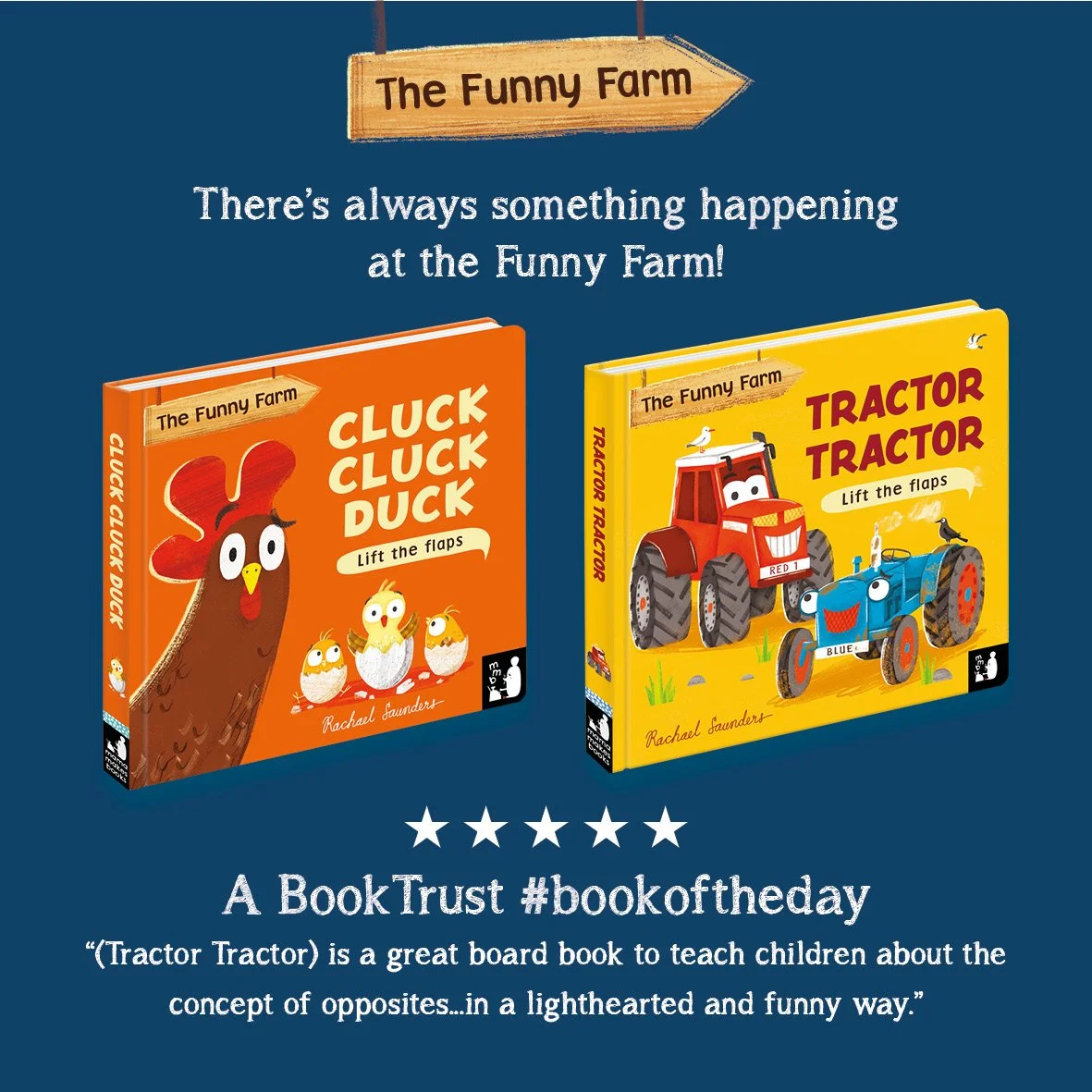
Try Tractor, Tractor and Cluck, Cluck Duck, with a simple rhyming story and hands-on flaps and sliders, these sturdy board books are designed to keep young children involved while you’re reading.
-
Choosing a book featuring something your child loves, is an easy way to keep them interested. Tractor, Tractor has tractors on every spread for children that love things that go, while Cluck, Cluck Duck has farm animals of every spread for children that love animals.
-
Yes. Tractor Tractor and Cluck, Cluck Duck are designed for children from around 18 months to 3 years, making it particularly well suited to 2-year-olds. The sturdy board pages, simple rhyming story, colourful illustrations and hands-on flaps and sliders are designed to keep young children involved while an adult reads with them.
-
Tractor, Tractor introduces opposites through pairs such as big and small, fast and slow, new and old, and clean and dirty. It also explores friendship, teamwork and how two very different characters can work well together. Cluck, Cluck Duck introduces counting one to five while lifting the flaps to count the ducklings. It also celebrates family, difference and belonging.
-
Readers have told us that children love Tractor, Tractor and Cluck, Cluck Duck and they love the gentle messaging in the books. But don’t just take our word for it, here’s some reader reviews:
“My 20 month old grandson is obsessed with tractors and he loves this book. Unfortunately it is the only book he wants read to him - over and over and over again!”
“Such a gorgeous book! Just the perfect length for my 2 yo before bedtime, I love that it rhymes and the flaps and sliders are not too many that it distracts. My little boy loves tractors but the best thing about it is the story- it's such a lovely message teaching good things to our little ones.”
“Cluck, Cluck Duck has quickly become a firm favourite at story time, and I'd happily recommend it to anyone looking for an interactive book that's both fun and meaningful.”
You will find some of the books you shared with your baby remain favourites as your baby grows into toddlerhood. Remember that whatever you read and share with your baby is valuable in terms of your special bonding time as well as helping with their language and reading skills and encouraging their vocabulary to grow.
Finally, don’t forget about the library! Most have boxes of baby books that you can read with them and borrow – plus they have baby sessions, too, that your baby will love (when you can visit them again)!
Happy reading!